| |
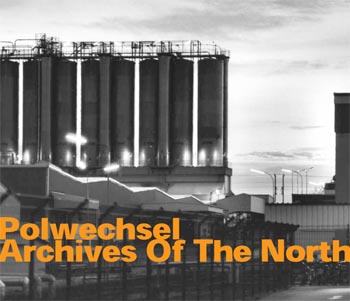
ARCHIVES OF THE NORTH
__________________________________
__________________________________
__________________________________
Beauty and the perfect imitations of failure Over the past two decades Polwechsel’s output has thrived on a democratic
process of specifically composing for the abilities and techniques of
its cast with each member possessing a unique and developed voice in instrumental
performance. During this period Polwechsel has produced divisive compositions,
structured improvisation and electro-acoustic works which have all spoken
intricately and explicitly on the organization of noise, the locus of
technique, and the dynamism of the ensemble.
Polwechsel work with a stringently refined vocabulary of techniques in
sound production and sonic choreography. Their works often patiently study
and extract beauty from the bare elemental juxtaposition of techniques.
They explore strategies where form and function are radically and frequently
challenged – the start-point is an expanded musical discipline which
deals with the mechanics of beauty in her many perspective distortions
and variations. It renders poetry through process, is littered with perfect
imitations of failure and aleatory justifications that occur with stunning
clarity of gesture and purpose.
What defines a Polwechsel piece is singular approach to the textural
and temporal. This is work which speaks volumes on its medium by revealing
the details of its architecture, each piece splays from a keystone which
will define its internal workings for the duration – which sets
this work apart from free improvisation – is that it works within
a framework which balances outré exploration with highly considered
logic. The work could be described as a stayed and conscientious debasement
of the notions of conventional musical form. The work can at times be
excruciatingly delicate, yet it contains an anger and directness that
demands consideration of its magnificence, of its explicitness, which
insights a drastic re-consideration of the state of music as material
– every note resounds with a question of its own integrity.
The unthinkable and the already thought to death
In music, the notion of ”new” has quite unpredictably manifested
in a non-committal and often light interpretation of an ”avant-garde”
– the aesthetics of which has filtered through into idioms defined
as ”ambient,” ”electro-acoustic,” ”improvisation,”
”IDM,” ”post rock” and so on, which are areas
rife with minor challenges and suggestions of an ”avant-garde”
form re-evaluation.
Polwechsel have actively re-contextualized aesthetics common to all of
these defined genres, which would suggest that without claims to revolutionize
the eclectic epoch, the work is conscientious of the suggestion that we
are in the midst of a pregnancy for a music-ethical transformation. In
this difficult, saturated realm of post-modernism or eclecticism, Archives
Of The North address a necessity of re-thinking the system and purpose
of the perpetual montage of the "avant-garde" signifier, that
is, the extended technique.
Polwechsel’s music pertains an attitude toward this, its stance
is an expression of confidence, self-awareness and humility achieved through
dedicated practice and mastery of technique and form. An airing of Powechsel
music has political undercurrents evocative of a general aspiration for
a justified newness in that it sets up a territorial scenario which accommodates
tradition and avant very tenuously, and by doing so provokes reconsideration
of the function of the ensemble.
In Archives Of The North Polwechsel has harnessed the aesthetics of a
free-noise as sound liberated from genre. They have distilled the potency
of the signifiers of oppositional free music, they have set about ordering,
pacing, arranging this repertory with the compositional stringency and
calculation of avant-garde composition – which is where they will
most frequently and effectively borrow.
Appropriately the opening piece ”Datum Cut” has derived its
process in part from Alvin Lucier’s ”I Am Sitting In A Room,”
which is a striking reminder that the exquisitely simple and effective
piece has had an undeniably resonant influence in electro-acoustic techniques,
while having another life as a poem on the subsuming and disappearance
of the performer through permutation. As an expanded approach to ensemble
performance, this appropriation of technique best describes how Polwechsel
explores self-reflexivity. Elaborating upon themselves and their place
within an architecture. This piece goes on to reveal its process in a
structural manner, its workings seem to uncoil like a wind-up clock being
taken apart.
British filmmaker William Raban has created a work entitled ”Take
Measure” in 1973. He stated his intention to ”mirror the processes
of production constructing the reflexive space in which the audience can
be directly engaged.” The projection of this film demonstrates the
space between the projector and screen by unraveling meters of film through
the aisles of the cinema. As this piece of film plays it recoils onto
the spool, the film snakes backwards through the audience as is consumed
by the projector. By transforming the screening event into an action the
work becomes about its space, materials and duration. Much like Lucier’s
”I Am Sitting In A Room” and a Polwechsel concert, the author
and observer, the room, the media and the mechanics are all illuminated
through a slight re-consideration of role. One can walk away from that
with their perceptions of a medium heightened.
Dean M. Roberts, December 2005
__________________________________
Dean Roberts I have been listening to it tonight. You won't believe me when I tell
you though, this is true, I got a Noise Police complaint while I was playing
the Polwechsel CD very loud ! I admit I was playing some punk singles
before EXTREMLY loud and in a break I heard some people calling from a
speaker outside my building. so I turned off the music and the lights.
I put the Polwechsel CD on not so loud but the noise police would not
go away and they came back and asked what I was doing - Then I went down
to the door to see what they want and they presented me a with a document
which was a noise warning ! they came in and they listened to the music
for a short time and made a measurement with a decibel meter. I wish I
had filmed this ! Then they asked what kind of music was this ! I said
"Polwechsel, from Austria" and then they said "Fuck mate,
I've never heard that before!" and I said yeah, it's not yet released
! And then one of the two guys asked me if you have a website ! and he
was very happy and curious about this! and they could not understand why
I was listening to this music on sunday at 11:30 pm so loud alone! it
really shocked them I think.
__________________________________
Dan Warburton, The Wire „The Polwechsel project has been exponential in defining new approaches
to the composition/improvisation paradigm,“ writes Dean Roberts
in an extended and perceptive essay accompanying Polwechsels fourth release
– the first to feature new recruits Burkhard Beins and Martin Brandlmayr
(Radian, Trapist) on percussion along with old hands Werner Dafeldecker
(bass), Michael Moser (cello, computer) and John Butcher (saxophones).
„Each phase of Polwechsel has been marked by a defining document
and the releases of their recordings have frequently bookended trends
and movements in improvisational and experimental music,“ he continues.
Indeed. One imagines that copies of the first edition of Polwechsel 1,
released on Cologne´s Random Acoustics label in 1994, might one
day fetch astronomical prices on eBay. From the outset, it anticipated
many of the developments that would characterise the next ten years of
improvised music. Namely a retreat from the high octane „gabbiness“
(to quote Radu Malfatti, Polwechsel member until 1997) of old school Improv
into a world of sustained sonority and timbral nuance, a studious avoidance
of unbridled and unruly „soloing“ in favour of clearly defined
composed – if not traditionally notated – structures. The
slow heartbeat of Polwechsel´s music became an aethetic cornerstone
of electroacoustic Improv. It was no coincidence that individual releases
by Butcher, guitarist Burkhard Stangl (who left the group in 2003), Dafeldecker
and Malfatti helped establish the Erstwhile label as electroacoustic improvisation´s
imprint of reference, and Polwechsel subsequently appeared as a group,
joined by Christian Fennesz, on the 2002 Erstwhile release Wrapped Islands.
With the benefit of hindsight, the four tracks on Polwechsel´s debut
album – three penned by Dafeldecker, one by Moser – marked
a defining moment when improvised music began to turn its back on Peter
Brötzmann and Derek Bailey and started looking towards Alvin Lucier
and Helmut Lachenmann instead.
Lucier and Lachenmann are namechecked in Roberts´s sleevenotes,
but Polwechsel´s music, though clearly indebted to both, navigates
a steady course between the complex virtuosity of Lachenmann´s self-styled
aesthetics of failure and Lucier´s pristine „it is what it
is“ minimalism. The processes at work in Moser´s „Datum
Cut“, which opens the new album, are evident enough if one pays
attention, but they´re half buried under a textural moss peculiar
to the group – „a webbing made of a hundred roots, that drink
in silence“, to quote Robert Bly´s translation of Rainer Maria
Rilke´s celebrated poem in Das Stundenbuch.
Which takes us to the album title, Archives Of The North (Rilke would
surely have appreciated it). Unlike its three generically numbered predecessors,
this one has a title, and its double reference to archives – library,
catalogue, documentation, classification, the weight of cultural tradition
– and North, with its attendent associations of harsh climate, Protestant
asceticism, cold black lakes and dark forests, resonates perfectly with
the music. Polwechsel albums are solemn, sometimes downright forbidding
affairs, but compared to the austere Lucier-like harmonic drift of „Toaster“
(on Polwechsel 2) and the gristle of „Government“ (on Polwechsel
3), Archives is suffused with, if not warmth, at least radiance, thanks
in no small part to the colours brought to the group by Beins and Brandlmayr.
Percussionists as opposed to drummers, both are here more concerned with
continuous sound production than with seeking to impose any kind of rhythmic
element, further distancing the music from any distant origins it might
have had in free jazz. Even the flurries of log drum clatter on „Core
Cut“ sound more like Silvio Gualda than Paul Lovens. It´s
significant also that three of the five tracks on Archives have been penned
by Moser, a classically trained cellist who works frequently with prestigious
New Music ensembles including Klangforum and Ensemble Neue Musik Wien,
and Berlin´s Zeitkratzer, who have arguably given contemporary classical
music at the turn of the 21 century the same shot in the arm that The
Kronos Quartet gave it a quarter of a century ago.
Even so, unlike Polwechsels 1 and 2, which share shelf space with Cardew,
Feldman and Haubenstock-Ramati on Werner Uehlinger´s bijou New Music
imprint hat[now]ART, Archives Of The North is on hatOLOGY, and comes with
the (supposedly helpful) instruction „file under Jazz/Free Improvisation“.
But like the unjustly overlooked Polwechsel 3, which Dafeldecker released
on his own distinctly user-unfriendly Durian imprint (functional unadorned
plastic case, all artist and track info only on Durian´s Website),
we´re a long way from what old school Hat Hut punters would consider
„free improvisation“ here. Though aficionados of post-AMM
laminal/Reductionist/lowercase/electroacoustic Improv will have no difficulty
identifying with the Polwechsel aesthetic. Despite their changes of personnel,
Polwechsel are a group with an invisible member: the group itself. Like
AMM. („The three players plus the group itself makes four: AMM is
a quartet with an invisible member“, Keith Rowe told The Wire in
2002.) The group have retained and refined a sound all of their own. Dafeldecker´s
low end thuds and gloomy E-string drones are instantly recognisable on
his „Mirror“, as are Moser´s discreet yet exquisite
touches of extended technique cello on the closing „Site And Setting“,
but it´s a credit to the group´s aethetic rigour that performers
as distinctive as Butcher, Beins and Brandlmayr have integrated so seamlessly
into the Polwechsel sound. Listen carefully and you can pick out Butcher´s
meticulous multiphonics, Beins´s trademark stone/polystyrene friction
and Brandlmayr´s ever daft cymbal work, but Archives Of The North
is, and will remain, a music that is far more than the sum of its parts.
__________________________________
Sinnliche "Frühstücksmusik" "Ob die Phase der 'Reduktion' vorbei ist? Diese Frage wurde mir zuletzt
viermal gestellt. Insofern liegt das wohl in der Luft. Wobei unter Musikern
das Thema schon länger virulent ist." Die Frage ist Werner Dafeldecker
zu stellen. Schließlich pflegt er - mit Michael Moser Kopf des Ensembles
Polwechsel - seit 13 Jahren eine Ästhetik der Klangmikroskopie im
Schnittpunkt zwischen kompositorischen und improvisierenden Strukturdenken.
Und dies hat auch international einen gewissen Kultstatus bewirkt. "In
die Schublade der 'Reduktion' gesteckt zu werden, dagegen haben wir uns
immer gewehrt", so Dafeldecker, früher Kontrabassist von Ton.Art
und Mitbetreiber des Durian-Labels. "Es hat bei uns genauso gut passieren
können, das wir mal volles Rohr losgetrötet haben. Uns ging's
anfangs darum, Material möglichst konzentriert zu bearbeiten, und
alles unnötig Erscheinende wegzulassen. Wie das Vibrato des Operngesangs
etwa." Wobei es auch sein konnte, "dass wir gesagt haben, wir
arbeiten mit dem Vibrato - aber dann nur mit dem Vibrato." Dafeldecker
und Michael Moser, den gefragten Cellisten (zuletzt in Donaueschingen
hervorgetreten), werkten indessen nicht allein auf weiter Flur. In Barcelona,
Berlin und Tokio betrieben Musiker ähnlich elementare Klangforschungen,
wobei die ebenfalls zahlreichen Kollegen in der Heimat Wien - wohl nicht
zufällig in zeitlicher Parallele zum abebbenden Elektronik-Hype -
sich als vielleicht erste wieder von den streng modernistischen Geräusch-Tüfteleien
verabschiedeten und konkrete Einflüsse zuließen - siehe die
aktuellen Arbeiten u. a. von Radian, Trapist oder Franz Hautzinger. Auch
das neue, ausgezeichnete Album von Polwechsel klinkt sich hier ein: Archives
of The North (hatOLOGY/Lotus) heißt es und wurde damit - sieht man
von den frei improvisierten Wrapped Islands-Sessions mit Christian Fennesz
(2002) ab - als erstes nicht nur mit einer nüchternen Nummerierung,
sondern mit einem assoziationsträchtigen Titel ausgestattet. Moser:
"Wir haben uns zwar gegen das Label gewehrt, aber zum Teil sicher
sehr reduzierte Stücke gemacht. Irgendwann kommt man an einen Punkt,
an dem man sagt: Weiter zu reduzieren hieße, mit dem Spielen aufzuhören.
Oder nach 30 Minuten Stille einen Ton zu spielen. Was nicht unser Ding
ist. Deshalb haben wir seit Jahren darüber geredet, die Musik in
die andere Richtung zu entwickeln." Um Irrtümern vorzubeugen:
Auf der CD wird nicht mit Zitaten jongliert oder gerockt. Polwechsel ist
natürlich Polwechsel geblieben. Jedoch: Der explorative Impetus scheint
offener, er geht nun weit über das Geräuschspektrum hinaus.
Die Formation legt in flirrenden Drones eine so bisher nicht gehörte,
schillernde Klangsinnlichkeit an den Tag. Viel zu tun hat jener neue Soundreichtum
auch mit Umbesetzungen: Burkhard Stangl ging, die Schlagzeuger Burkhard
Beins und Martin Brandlmayr kamen. "Die CD ist relativ zugänglich.
Vielleicht werden wir dadurch einige Hardcore-Fans verlieren, dafür
neue hinzugewinnen, so Dafeldecker. "Ich persönlich könnte
mir die CD zum Frühstück einlegen."
Andreas Felber, Der Standard
__________________________________
Chroniqué par Grisli, dMute le 13/06/06 Polwechsel
Archives Of The North (2006)
Avec Archives Of The North, Polwechsel - quartette autrichien formé
en 1993, deux fois remaniés depuis, suite aux départs du
tromboniste Radu Malfati en 1997, et du guitariste Burkhard Stangl six
ans plus tard - accueille les percussionnistes Martin Brandlmayr et Burkhard
Beins. Et fait de son quatrième disque un chef d'oeuvre d'ambient
électro-acoustique.
Enfilant les notes soutenues de son saxophone ténor, John Butcher
emmène d'abord sa formation le long d'un schéma répétitif,
à l'origine d'un monde de métaux réverbérés,
évoquant Eno ou Xenakis (Datum Cut), avant d'offrir aux nouveaux
venus l'ouverture de Mirror. Là, les batteurs jouent des résonances,
explorent les possibilités sonores des cymbales, soit : usent de
schémas rythmiques non aboutis, empêchant le violoncelle
dissonant de Michael Moser ou les souffles que le même traite à
l'ordinateur d'être recadrés.
Pas à l'abri des perturbations, le groupe instaure ensuite quelques
instants d'exécutions rapides (Core Cut), puis improvise totalement
Magnetic North, amas d'interventions délicates rendant une atmosphère
diaphane à force d'avoir été étirée.
A intervalles réguliers, un dialogue entre la contrebasse de Werner
Dafeldecker et les percussions s'immisce en Site And Setting, dernière
plage d'une réalité plus concrète, oscillant entre
le grincement du violoncelle et les combinaisons circulaires d'un saxophone
travesti en flûte indienne.
A l'arrivée, l'essentiel a moins été dit qu'inventé
et donné à entendre. Les explications, déjà
subjectives, changeront au fil des écoutes. La seule évidence
étant la qualité indéniable d'Archives Of The North,
signé d'un Polwechsel encore plus loin devant.
__________________________________
Stefano i. bianchi, blowup
__________________________________
nate
dorward
__________________________________
Guillaume TARCHE, IMPROJAZZ Avec ce cinquième* album, l’essentiel Polwechsel retrouve,
mais dans la « série orange » (plutôt jazz, ce
qui est amusant), la maison Hat qui avait publié dans la «
série rouge » contemporaine (hat[now]ART – anciennement
hat NOW series) ses premières traces phonographiques. Si le groupe
avait jusqu’alors maintenu un effectif relativement stable –
après le départ du tromboniste Radu Malfatti qui a donné,
au printemps, avec Mattin, un Going fragile, ? Formed 103, pour le moins
finement radical et réussi – il ne compte dorénavant
plus le guitariste Burkhard Stangl dans ses rangs : John Butcher (ss,
ts), Werner Dafeldecker (b) et Michael Moser (cello, computer) accueillent
ainsi pour cet enregistrement de mai 2005 les batteurs-percussionnistes
Burkhard Beins et Martin Brandlmayr.
L’introduction de ces deux instrumentistes dans l’univers
de timbres élaboré par la formation pourrait surprendre…
ce serait mal évaluer leurs accointances esthétiques avec
la démarche (tout comme il n’y a rien d’étonnant
à entendre Butcher avec Eddie Prévost dans leurs récents
Interworks, ? Matchless MRCD66) de ce groupe des plus marquants –
a-t-il jamais joué dans nos contrées ? ah, Afijma, afflige-moi…
Ils participent à la mise en vibration et au raffinement des matières
(des traçantes jusqu’aux plus profonds ébranlements
frottés) et confortent une forme certes de solennité mais
également une austère puissance assertive, une façon
de poser, dans un rigoureux séquençage, les objets sonores
sans verser dans le design glacé (à bon volume, les divers
grains apparaissent). Leur apport me semble tenir au fait qu’à
la minéralité monolithique des architectures antérieures
se substituent des compositions et climats assez distincts, des battements
d’eau, de très lentes éclaboussures, une paisible
respiration : comme une pacification de l’espace (espace musical
et espace domestique d’audition) sans abandon de l’intensité
de ce son collectif si caractéristique.
__________________________________
Michael Anton Parker, Downtown Music Gallery 11 years after their influential debut recording on Random Acoustics
comes the 5th public document of this ensemble centered around Michael
Moser and Werner Dafeldecker's efforts to untangle the products and processes
of improvisation. This quintet edition of Polwechsel is the first without
Burkhard Stangl, but the addition of pace-setting idiophonists Martin
Brandlmayr and Burkhard Beins is the most radical revision. John Butcher's
unparalleled extended saxophone vocabulary continues to be the ensemble's
most compelling adaptation of the timbral legacy that improvisational
methodology has nurtured and I admire him for his willingness to contribute
to a mostly non-improvised project like Polwechsel. As in the work by
Beins/Denzler/Durrant (Trio Sowari), the conventional identities of saxophone,
drum, and cymbal are rarely recognizable. Likewise for Dafeldecker's contrabass
(he doesn't use guitar or computer for these works), which is miraculously
subtle. This album is a momentous masterpiece and quite a step beyond
earlier Polwechsel and most other work by these folks I've heard. Beins
and Brandlmayr vastly multiply the timbral complexity of the ensemble
sound, narrowing the gap between fundamental frequencies and overtones
through diffusely pitched sounds like bowed cymbal and other frictional
textures. As much as I enjoy them, the first two Polwechsel albums and
parts of the third (excepting "Government") were compromised
by an arid and dull feeling owing to the internal conflict of narrowly
pitch-centric sound sources (cello, acoustic guitar, contrabass) trying
to deal with pitch-independent structures like extended stasis, discrete
shifts in vertical density, etc. Alongside the spectral expansion achieved
by this quintet, Moser's continued evolution as a computer manipulator
(in addition to his cello playing) is equally responsible for the erasure
of boundaries between individual instrumental identities and the construction
of monolithic sound shapes brimming with disembodied slow-moving patterns
like the ridges on sculptural surfaces that appear flat from a distance.
For the sake of broadly describing the music, it might be useful to know
that it's fairly slow, quiet, careful, and mostly based around continuous
textural blends that retain a distinctly "acoustic" feeling.
I'm often reminded of the very calm passages of Dumitrescu. To my ears
they are one of the few medium-sized-or-larger ensembles with the intense
focus and refinment of timbre to create a ritualistic experience of tension
and immersion approaching the benchmarks established by BSC ("Good")
and Trockeneis ("5025 AD"), though it's worth noting that this
music never loses its cool or climbs arches into primal release. Its combination
of sustained tranquility and infinite nuance make it a breathtaking work
that demands the attention of anyone following the development of music
in the current era.
__________________________________
Andreas Fellinger aka felix, freistil Nr.9 POLWECHSEL
archives of the north
hatOLOGY
Burkhard Beins (dr, perc), Martin Brandlmayr (dr, perc), John Butcher
(ts, ss), Werner Dafeldecker (b), Michael Moser (c, computer)
rec: 06; Vertrieb: Lotus
Die Platte des Monats (und darüber hinaus) befindet sich hiermit
ausnahmsweise nicht bei den Rezensionen. Denn was hier mit einem Schlag
aufs Becken und einem Ton aus Butchers Sopransax anhebt, gehört zum
Bemerkenswertesten, das zurzeit in der Improvisierten Musik zu hören
ist – ein organisches Ganzes, dem man die ausgiebige Zeit ihrer
Entstehung in jeder Phase dieser gut 50 Minuten anhört. Geradezu
absurd mutet der Label-Vorschlag „File under: Jazz/Free Improvisation“
an, mit Jazz und daraus resultierenden Impro hat die Polwechsel-Musik
tatsächlich nichts mehr gemein, oder wenigstens nicht mehr als das
Instrumentarium, das dort drüben auch zum Einsatz kommt. Aber wenn
sich sonst keine Schublade findet, was soll man da machen, gell? Die „Archives
Of The North“ – der Titel scheint mir noch das Rätselhafteste
bzw. Spekulativste an dieser CD – erklingen in einem kollektiven
Sound, der ganz ohne Swing auf der einen und ohne Genudel auf der anderen
Seite auskommt. Im Gegenteil: Durch klug angemessene Strukturen werden
in dieser Klangarbeit, in der vieles parallel passiert und manches komplex
geschichtet ist, Präzision und Leichtigkeit ebenso großgeschrieben
wie Klarheit und Transparenz – und vermögen dabei auch noch
ein Geheimnis zu bergen. Was für die Jungen Sonic Youth bedeutet(e),
verdiente hier die Überschrift Sonic Adult. Eine Rarität, die
Polwechsel außerdem gelingt: Diese fünf Stücke eignen
sich sowohl zum konzentriert Zuhören als auch zum nebenbei Laufenlassen.
Musik für alle Lebenslagen. Und selbst nach dem 20. Durchlauf sitze
ich erhitzt da – und gebannt, obwohl das gute Stück bereits
seit gut einer Viertelstunde vorbei ist. Mindestens so lang klingen die
„Archives Of The North“ nach. Die Aufhebung der Zeit hat schon
begonnen.
__________________________________
tom Sekowski, Gaz-Eta One of the most fitting descriptions of a live Polwechsel gig was when
someone told me, "it's like watching paint dry". An honest answer
perhaps. In their third line-up since their inception in the early 90's,
ultra-minimal Polwechsel is now a quintet. Gone is guitarist Burkhard
Stangl. Addition of percussionists Burkhard Beins and Martin Bradlmayr
makes for an interesting paradigm shift. There are still plenty of severely
austere and quiet moments. Polwechsel is famous for its long, drawn-out
passages. Whether it's John Butcher's elongated breaths on the tenor or
soprano that seem to go on for eternity or Michael Moser's slightly out-of-whack
cello parts or perhaps it's Werner Dafeldecker's slowly massaged bass
strings - every last inch of their music is carefully thought out and
delicately balanced. Exciting part in their new pieces is the shimmering,
purposefully timed percussion tid-bits. Beins and Brandlmayr trade off
on utilizing percussive tools at their disposal and when both are permitted
to hit the cymbals or caresses the skins lightly, the place really shakes.
Chamber like quality still persists as does a turtle speed of execution.
Once again, emphasis is put on meticulous delivery of each and every sound
in the room, rather than a rush of audio all at once. Headphone music
perhaps, much of the work was put together in the mixing/editing process,
which takes nothing away from the power this ensemble commands during
a live performance. Listener can't help but to be drawn into their work
simply by the act of the unexpected. What will come next? You're bound
to hear an explosion or a climax that is nowhere to be heard, but still,
you're thrilled by the wait. Their approach to timbres and complex shifts
in microscopic music creation has not changed much since inception of
the group. Whether your bag is watching paint dry or maybe a mixture of
musique concrète, improvisation and carefully composed sounds turns
you on, "Archives of the North" has it all.
__________________________________
Massimo Ricci, Touching Extremes -
For their fourth album Polwechsel gathered in a quintet comprising Burkhard
Beins and Martin Brandlmayr (drums, percussion), John Butcher (tenor and
soprano sax), Werner Dafeldecker (double bass) and Michael Moser (cello,
computer). Ever since the very first moments of the opening track "Datum
cut" we plunge right into an equalitarian oleography; this obscure
diffusion of massive immanence explicates through semi-menacing permutations
of the acoustic matter, like if the players were stimulated by the very
transudations of their reciprocal perceptions. The percussive element
introduced by Beins and Brandlmayr, which replaces Burkhard Stangl's guitar
sounds, often shifts the overall balance towards territories bordering
AMM and Organum, particularly when bowed cymbals and scraped metals enter
the picture. Yet it's the organic continuum elicited by Dafeldecker's
bass and Moser's cello that colours the album with a sense of "fulfilled
gloom" which maintains a firm grip on our disposition; on the other
hand, Butcher tends to remain less discernible, although being thoroughly
effective in the distillation process of this music's physical essence.
My favourite moment is represented by "Magnetic North", the
lone track signed by the quintet as a whole: a periodic cycle of spheroidal
figures rotating amidst morphing nightglows, a piece that functions as
an orientation point in between the many conscious suspensions born from
Polwechsel's intuitive gestures. "Archives of the North" is
another fundamental chapter in this collective's history and is warmly
suggested as an addition in your wantlists.
__________________________________
Brian Olewnick, Bagatellen It´s tough to imagine Polwechsel without Burkhard Stangl but here
it is, their erstwhile guitarist replaced by two percussionists, the redoubtable
Burkhard Beins and the always astonishing Martin Brandlmayr. While the
resultant disc doesn´t, for this listener, reach the heights of
their "2" from 1998 (a seminal album for opening up my ears
to this area of music), I find it far preferable to the overly dry previous
release on Durian. Five tracks, four of them composed (three by Moser,
one by Dafeldecker), one group improvisation, all of them solid. The percussion
announces itself quickly on "Datum Cut" with struck and swiped
metal, layered smoothly into the deep and richly bowed strings as well
as the almost string-like reed work of Butcher. Throughout the recording,
it´s rather easy to "lose" his contributions, they blend
so ably with the ensemble. In his liner notes, Dean Roberts makes reference
to Lucier´s "I Am Sitting In A Room" with regard to this
piece though I´m unable to hear any sort of structural similarity
unless its iterations are lengthy enough that I´ve lost track of
any pattern. It does, somewhat, bring to mind a few of that composer´s
other investigations into sine waves and their near correspondence to
certain tones produced by acoustical objects, but only in a very general
manner. Whatever its influences, it´s a strong, vibrant piece, well-paced.
Dafeldecker´s "Mirror" begins scratchily, morphing into
a lovely bass-led section with, if I´m hearing correctly, Butcher
contributing some wonderful, deep feedback sax which in turn blends into
stridently bowed cymbals before nestling back into clicks `n´ drones.
Bass pops and wooden thwacks open Moser´s brief "Core Cut",
possibly the most intense and successful piece on the disc. It almost
sounds as thought there´s some sort of round at play here, the elements
rotating in and out of sync, but not in a predictable manner, with faint
echoes of gamelan. The improvisation, "Magnetic North", also
works very well and is (perhaps not surprisingly) the lushest and airiest
of the works presented here. There´s a relatively tonal backdrop
formed, I´m guessing, by Beins´ rubbed percussion and some
computerized offerings from Moser that allow the piece to waft along gently,
bumping into the odd bell-tone or low saxophone billow. The final track,
"Site and Setting", is the most clearly composed of the bunch
and I found myself weighing the rather episodic structure of the piece
(especially in its first half), which I thought was a little strained,
against the individual components of each episode, many of which are gorgeous
and/or just fascinating. The percussionists shine here and, as before,
integrate superbly with the strings. Special mention should again be made
of Butcher. Here as almost everywhere else on the album, a cursory listen
might not detect his presence at any given time. But there´s virtually
no moment, if one listens closely enough, when you can´t discern
him, subtly adding crucial texture and infinitely enriching the depth
of the music. "Archives of the North" is well worth hearing.
As good a recording as it is, I´m actually more excited anticipating
what´s to come from Polwechsel. I hope this incarnation holds together
for at least a little while; there´s vast potential here.
__________________________________
Martin Hufner, Taktlos (BR/NMZ) "Critics Choice", Jazz-Zeitung 2006/10: Eine Klang-, Ton- und
Geräuschwelt eigenen Tempos, wie eine unbekannte Insel im Strom der
Normalmusik.
__________________________________
Jason Bivins, Dusted Magazine The (mostly) Austrian collective Polwechsel has been around for a long
time now. Initially formed by bassist Werner Dafeldecker and cellist Michael
Moser, the group has changed lineups a few times (and now they have shifted
from the composition-oriented Hat Now imprint to the improv-focused Hatology).
Initially comprising its co-founders, guitarist Burkhard Stangl and trombonist
Radu Malfatti, for their second album, Polwechsel replaced Malfatti with
tenor and soprano saxophonist John Butcher. This lineup remained in place
for their third full-length (on Durian) and their Erstwhile collaboration
with Fennesz. On Archives of the North (Hatology 633), Stangl has been
replaced by drummer/percussionists Burkhard Beins and Martin Brandlmayr
(the latter known by many for his sizzling work in Radian and Trapist).
It´s quite a shift in terms of the immediate impression of these
improvisations, although the group´s overall approach to the music
remains consistent. They remain one of the most intriguing groups in post-AMM
improvisation and this is a strong set. Occasionally an instrument is
struck or a staccato note articulated, but for the most part things fade
in and out on beds of vibrating cymbals, excited strings, and breath.
Ghost sounds float, spirits seem to possess metal husks and long-dead
machines, the inanimate comes alive. This feel is especially felt on the
opening "Datum Cut" (which Dean Roberts, in his informative
liners, likens to Alvin Lucier´s "I am Sitting in a Room"),
which follows the long, slow resonations of a distant tolling bell. Even
when the music is most voluble as on Dafeldecker´s "Mirror",
where things are (relatively speaking of course) somewhat declamatory,
or Moser¹s percussive "Core Cut" it is always subtle,
muted, restrained. But don´t catch yourself drifting away, because
there is (on almost all of these tracks) an insistent low thrum that billows
ominously. The title track this disc´s only fully improvised
piece has a sinister feel to it as well, and I can´t help
but hearing the entire disc as if it´s preoccupied with this sense
of dread or foreboding (a lovely irony considering how light and fluid
Polwechsel can be). This gives it a character that lingers long after
the record is over, and which brings me back to it repeatedly.
__________________________________
Ken Waxman, Jazzword / Jazz Weekly Situated even more so than previously within its own unique sound world,
the now five-man Polwechsel mixes reductionist techniques and inchoate
electronic tinctures with the autonomy of FreeImprov to make its point
On this CD, the Austrian-British band changes direction by adding two
percussionists Burkhard Beins and Martin Brandlmayr to an
aural concept that previously was advanced by Polwechsel founders, Werner
Dafeldecker on bass and cellist Michael Moser and given auxiliary tinctures
when London-based reedist John Butcher joined the ensemble at the beginning
of the century. True to its initial impulses though, Beins, who has partnered
with everyone from British guitarist Keith Rowe to vocalist Phil Minton;
and Brandlmayr, who is in the Trapist trio which explores similar territory;
aren´t percussionists in the conventional sense at least if
that´s measured in beats, flams or paradiddles. Instead both men
inject barely pressured, stretched tones from their kits long, hocketing
cymbal vibrations, patterning wooden rim shot snaps, drum top scrapes
and friction plus chains rattling and the rolling of blunt objects. Interlocking
with these impulses are Butcher´s distinctive tongue fluttering
and stops, singular tone warbling, and multiphonic note expansion. Dafeldecker
adds precise arco string movements and more concentrated dense hums, plus
occasional, and often seemingly random, pizzicato string strums. Additionally,
Mosher outputs electronic impulses from his computer from time-to-time.
Yet the crackling reverb and input signal- crossing is introduced with
the same lapidary care as the reedist brings to his wind-chime-like trills
or the bassist does to his droned undercurrent. Essentially the concept,
like similarly distinctive tone distribution from England´s AMM
or Australia´s The Necks is inimitable improvisation following
its own reductionist strictures. This way, the underlying and overlaid
pulses are as liable to result from polyphonic interaction among subsets
of acoustic instruments as from wave form oscillation produced electronically.
Zart as well as staccato, yet characterized at points with authoritative
undulation arising from strummed chords and reed-linked ghost-note obbligatos,
the sound appears and vanishes according to its own logic. Of and in itself
and apparently timeless, ARCHIVES OF THE NORTH marks a stimulating next
step in Polwechsel¹s evolution.
__________________________________
Carsten Fastner, Falter Mit ihren stringent komponierten Improvisationen, ihrer beinahe sturen
Konzentration auf kleinste klangliche Details, ihrer Faszination am Geräusch
und der ganz selbstverständlichen Verbindung von Akustik und Elektronik
agieren Polwechsel seit 1993 in einem riskanten Genre. Nicht zuletzt dank
des auch internationalen Erfolgs haben sie es geschafft, mittlerweile
geradezu paradigmatisch für eine avancierte Spielart der Wiener Musik
des letzten Fin de Siècle zu stehen. Nach längerer Pause präsentiert
sich die Formation um Michael Moser (Cello, Elektronik) und Werner Dafeldecker
(Kontrabass, Elektronik) nun mit Saxofonist John Butcher sowie den Perkussionisten
Burkhard Beins und Martin Brandlmayr in neuer Besetzung - und mit den
alten Qualitäten: Intensität durch radikale Reduktion.
__________________________________
akro, kulturwoche.at Burkhard Beins und Martin Brandlmayr, Schlagzeug und Perkussion, John
Butcher an den Saxofonen, Michael Moser und last but not least Werner
Dafeldecker sind das Quintett Polwechsel. Und auch fünf Musiker können
kontemplativ sein. Der stetig wallende Soundteppich aus elektronisch generierten
Tönen und expressiven perkussiven Einsprengseln bilden das Fundament
für die sparsam gesetzten Tönen von Bass, Cello und Saxofon.
Werner Dafeldecker meinte dazu in einem Inerview "Noch weniger wäre
nichts". Damit meint er ein Nichts an Tönen, aber nicht ein
Nichts an Empfindungen und Emotionen und Zustandsbeschreibungen. Auf dieser
CD wird mit sehr wenig enorm viel erzeugt und wer bereit ist, sich auf
die unendliche Tiefe der Assoziationen einzulassen wird reichlich belohnt.
Wo Nummern bis auf das Skelett der Harmonik abgenagt sind, wo der Knochen
wichtiger ist als das Fleisch, da beginnt diese Musik und da hat auch
der Hörgenuss seinen Anfang. Fragmentarisch klingen Melodien an,
entstehen Themen, die im nächsten Moment wieder verworfen werden,
tauchen Bilder auf, die sich sofort wieder im Nebel verflüchtigen
und enstehen Stimmungen, die tief berühren. Es sind Klanggebilde,
die im Moment entstehen, die in freier Assoziation geboren werden und
die so nicht mehr wieder kommen. Der Aspekt des Flüchtigen, der Reiz
des Augenblicks und die Spannung des Moments beherrscht diese beharrlich
beherrschte CD. Musik, die erarbeitet werden will, von den Interpreten
genau so wie von den Konsumenten.
__________________________________
Marc Medwin, Grooves Magazine A group with Polwechsel´s importance must bear up continually to
the weight of expectation, and this newest disc certainly does not disappoint.
On this outing, founding guitarist Burkhard Stangl is absent, making way
for two percussionists, Burkhard Beins and Martin Brandlmayer(...) While
Polwechsel¹s third full-length, Polwechsel 3 (on Dafeldecker´s
Durian imprint), was a series of harsh juxtapositions and whiplash starts
and stops, Archives is glacial. It lurches into life with a clang and
a saxophone ripple, but the rest of opener "Datum Cut" consists
of echoes and resonances of that first moment. Some of these are probably
quite literal, a fair amount of processing clearly in evidence while crystalline
tones glow, fade and re-emerge in other registers. It´s one of the
most beautiful tracks that the group has issued, melding the best elements
of improvisation and composition to form a structure that skirts electro-acoustic
cliches. (...) Archives of the North a fascinating and challenging listen,
partly because of how simple it all seems on the surface.
__________________________________
Kurt Gottschalk, All About Jazz - In a world based largely on solo and duo work and chance collaborations,
Polwechsel and poire_z were supergroups. The quiet flutters of electronics
and acoustic instruments can be hard enough to keep fresh and engaging
for two performers, but often times larger groups just blur the whole
creation‹becoming more like a mud puddle than a cloud. If AMM are
the forebears of the quiet improv scene (and they are), Polwechsel and
poire_z were the proudest sons. By 2004, however, both groups had disbanded,
leaving a hole in the European version of onkyo. The members continued
to work, of course, but for followers it was something like the Stones
had broke up at the same time as the Beatles. Sure, we still had the Kinks,
butŠ Happily, Polwechsel, originally formed in 1993, has returned
with its third lineup and fifth release, one every bit as strong as its
excellent, sometimes hard to find predecessors. The group¹s founders,
cellist Michael Moser and bassist Werner Dafeldecker, remain, as does
saxophonist John Butcher, who replaced trombonist Radu Malfatti in 1997.
The five tracks on Archives of the North (ranging from five to fifteen
minutes) are immediately recognizable as Polwechsel sound‹sustained,
breathy scrapes and tones punctuated very occasionally by discrete bass
occurrences. But the surprise this time, with the departure of guitarist
Burkard Stangl, is that the group now has two percussionists. For such
a soft and abstract ensemble, drums would seem a detriment, but Burkhard
Beins and Martin Brandlmayr approach the group with an orchestral sense.
There are more abrupt moments here than on previous discs, but then Revolver
was hardly Beatles for Sale, either. The group has grown in breadth and
dynamic‹and for the better, if only because sitting still is never
an improvement.
__________________________________
Nic Jones, All About Jazz The process of making music can sustain only so much discussion, and
the essay that accompanies Archives Of The North more than adequately
covers this abstract material. In any case, Polwechsel's sound world,
as with any manifestation of experimental music, is better experienced
than analysed.
One pertinent reference point is Morton Feldman's singularly reduced minimalism.
All of the pieces here certainly echo Feldman's penchant for unconventional
development, and the results, as on Michael Moser's 'Datum Cut' and the
group's 'Magnetic North' occupy a superficially similar state of stasis.
There are, however, forces of even deeper subversion here, and John Butcher's
contributions best exemplify this. At no time does his saxophone actually
sound like a reed instrument, with the exception of some passages on 'Site
And Setting' and while the the two percussionists stand out by dint of
their dryness and comparative lack of sustain, they are deployed in a
manner that is complementary to the advancement of greater group forces.
Through his use of a computer, cellist Michael Moser aids that subversive
process, and again the analysis of precisely what he does with it seems
irrelevant in view of the fact that his contributions are equally geared
towards group ends.
The secrets of this music, and they're numerous, seem to be so deeply
buried within it that the disc just may yield endlessly rewarding listening.
The music occupies its own space, and its singularly uncompromising nature
is nothing but welcome to these ears.
__________________________________
Philippe Robert, Mouvement Depuis son premier album en 1994, Polwechsel n’a eu de cesse d’inventer
de nouvelles approches de la musique, de décloisonner les rapports
entre l’improvisation et la composition. Dès cette èpoque,
cet ensemble à géométrie variable défrichait
déjà beaucoup des chemins qu’emprunterait l’improvisation
au cours de la décennie suivante – Radu Malfatti, futur >>
maitre à penser << du réductionnisme, en fit partie
jusqu’en 1997, tous le autres membres ayant par ailleurs enregistré
des disques capitaux pour le label Erstwhile, notamment avec Christian
Fennesz. Sur Archives Of The North, Polwechsel continue son exploration,
toujours plus redevable à Alvin Lucier qu’à Derek
Bailey. Grâce à de nouvelles recrues issues des groupes Radian
et Trapist (Burkhard Beins et Martin Brandlmayr), le collectif s’attache
ici au potentiel des percussions, à la manière de géologues
: chacun inventorie son matériau, strate après strate, concentré
sur l’écoute réciproque. Dans l’organisation
de l’ensemble, des éléments nouveaux surgissent sans
cesse du silence, par bribes, tandis que d’autres s’effacent,
liquéfiés. Paraphrasant saint Augustin, le compositeur Luigi
Nono écrivait : << Il n’y a aucun chemin, seulement
celui qui marche. >> Polwechsel trace un passionnant enchevêtrement
de textures complexes, sans autre boussole que son envie de dialoguer,
et donc d’extraire du son et du sens, en direct.
__________________________________
Boris Wlassoff, Revue et Corrigée Il y a eu un glissement sémantique dans le changement de catégorie
de ce cinquiéme Polwechsel toujour chez Hat mais en improvisation
libre et plus musique nouvelle contemporaine.Finit le voisinage scelsien
et bienvenue celui des jazzman!
Pourtant Polchwesel a peu en commun avec le jazz et peut étre méme
avec l'improvisation "académique".Cet ensemble promis
à la légende des idiomes singuliers (AMM , Nuova Consonanza
, MEV) trace depuis 14 ans un parcours singulier autour d'un coeur de
deux compositeurs qui signent l'essentiel des titres: Michael Moser (celliste)
et Werner Dafeldecker(doublebass) .Leur idiome au plus loin du bombardement
virtuose relève de la lumiére comme couleur pas du texte
, plaçant les textures, les températures ,les techniques
de fondues au centre de la pratique compositionelle.Car il y a composition
et on trouve de trés sérieuses et trés belles partitions
sur le site du groupe qui pour chaque disque démontre une volonté
de tester la validité de l'écriture de mettre en son le
canevas d'une pensée sans pour autant céder à la
coercision maniaque.Ceci bien sur est dans l'héritage tant scelsien,que
cagien de la spectralité ,de l'exhausivité de l'instrument
du bruit et des fréquences. Passons sur les importants remaniements
d'effectifs qui voit la percussion autrefois résiduelle faire une
entrée en force sur "Archive of the north" et notons
la prédominance des cordes qui imprégnent toute l'esthétique
de Polwechsel . Elles sont essentielles pour tendrent la matiére
spectrale,l'entretenir, la moduler, gommer les attaques, déployer
les résonances, permettrent un flottement trés fin autour
d'une hauteur centrale ce qui amena Scelsi à les privilégier
au piano pour sonder le coeur du son. Polwechsel exploite comme lui (écouter
Maknongan si vous en douter) un monde de gradients ,de tensions d'épaisseurs
de flux qui relévent de la nature ondulatoire du son et de la superposition.Pour
ne pas briser les parcours graphiques hachurés des photo-scores
il emméne la percussion vers les métaux vibrants et le sax
(jadis le trombone paradigmatique "soufflé" de Malfatti)dans
des étirements de bruit blanc effaçant toutes jazzités
du timbre de cet instrument. Les partitions sont explicites, chaques zones
de sol gelés ou laissant appaittrent le sol constituent une indication
de matiére associée à un jeu que la timeline reporte
sur la photo entiére, synthése pansonique dont les autres
pages ne sont que des bouts. On a là toute l'idiosyncrasie du duo
zoomer, dériver a travers les textures parfois ponctuer de saillies
percutées qui donne à entendre le monde en suspension de
ce quintet exceptionnel. Ambient , drone , spectralité qu'importe
ils sont une seule et méme volonté de ne pas céder
sur l'essentiel : la musique est l'expression fondamentale du son, certes,
et audelà du monde lui méme(si on ne réduit pas ce
terme à la seule et minuscule terre mais à la vibration
universelle de la matiére et du vide. On peut écouter ces
plages en lisant le difficile mais passionnant "Vide et création"
de Michel Cassé s'imprégner de l'actualité brulante
que musique et physique on en commun .Par chance la musique est bien plus
facile d'accés quoique beaucoup trouvent trop dur l'effort d'en
écouter et préférent se laisser couler exténuer
dans la muzak. Cette grande musqiue éclaire le monde de l'intérieur,
elle est un cogito vibrant éclot du coeur de chaque boucle de pression
d'air. Une errance sublime dans le nord magnétique d'un lieu indécidable
trés concret et trés abstrait .Plus que conseillé.
__________________________________
Ben Ratliff, New York Times 01.14.07 A German-Austrian-British band that equally mixes electronics and acoustic
instruments, and improvisation and composition, Polwechsel is fully abstract,
if you consider lack of melody the definition of abstraction in music.
With “Archives of the North” (Hat Hut), its third album, the
group has reached a state of refined grace. It now has the drummers Burkhard
Beins and Martin Brandlmayr, the saxophonist John Butcher, the bassist
Werner Dafeldecker, and Michael Moser on cello and computer. Working together,
they make the most beautiful bowings and chimings and scrapings, blending
them so that it all becomes one fluid motion. It’s lovely music
that some people might not call music at all.
__________________________________
-
/..
|
